
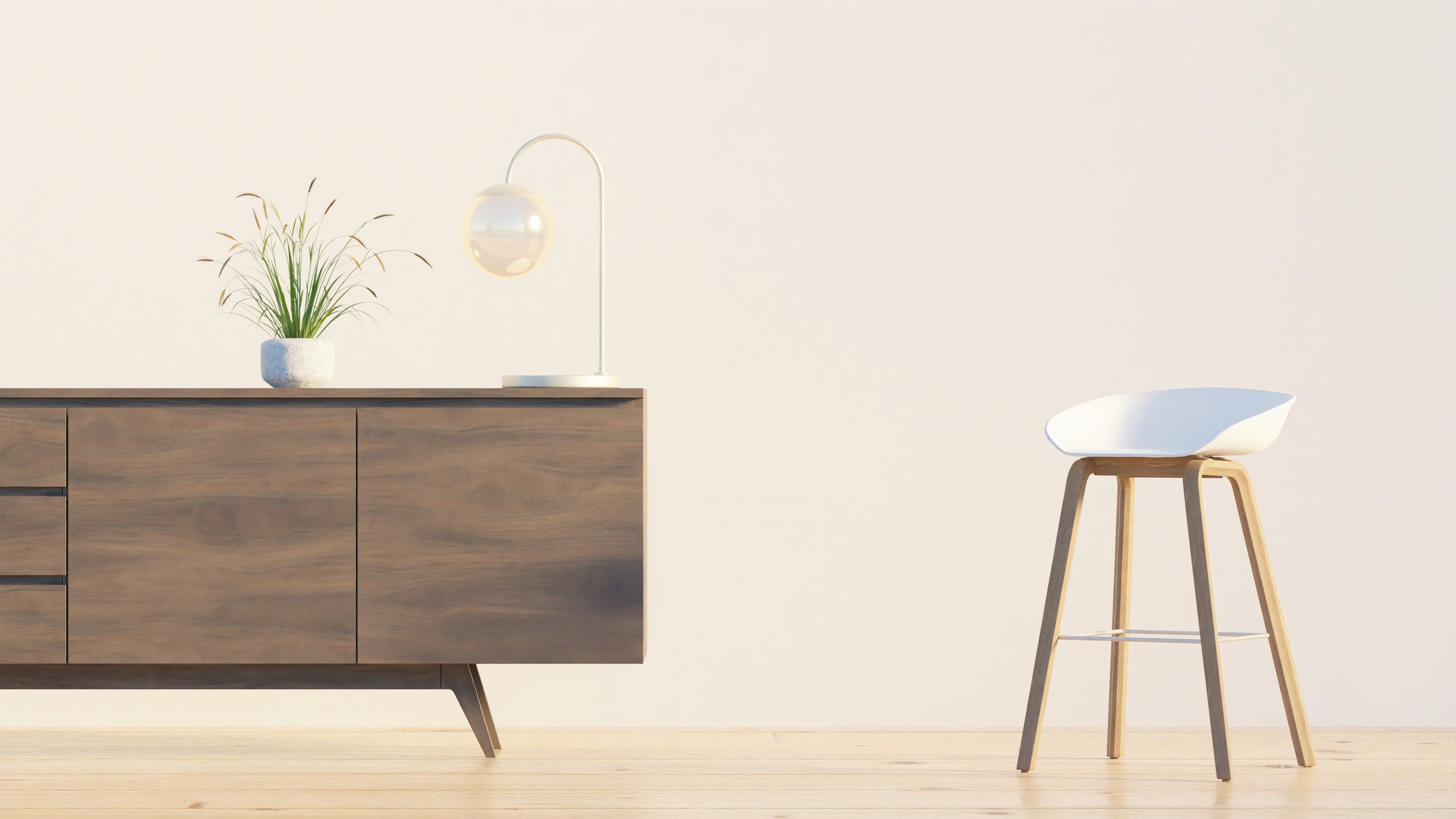
The solid-versus-engineered argument is usually framed as authenticity against economy. That misses the point: they behave differently, and the right answer depends on the room.
Movement is the real difference
Solid timber expands and contracts across the grain with humidity. Well-made solid furniture is designed around this — floating panels, breathing joints, no rigid cross-grain glue-ups. Engineered boards are dimensionally stable by construction, which is why wide flat surfaces such as wardrobe doors and long desk tops are usually engineered even in expensive pieces.
Where solid wood earns its price
- Frames and legs — anything taking load or joinery stress
- Edges that get knocked — solid takes a dent; laminate chips and cannot be made good
- Pieces you intend to refinish — solid can be sanded back repeatedly over decades
Rubberwood, teak and ash all fall here. Rubberwood in particular is a genuinely sustainable choice: it is harvested from plantation trees at the end of their latex-producing life, so the timber is a by-product rather than the reason for felling.
Where engineered wood is the better engineering choice
- Large flat panels — wardrobe shutters, desk tops, bed platforms
- Modular systems — consistent thickness makes fittings and alignment predictable
- Humid rooms — a properly edge-banded engineered panel outperforms poorly seasoned solid timber
The detail that decides longevity
For engineered furniture, edge banding is everything. Exposed or thin banding lets moisture into the core, and once a board swells it never recovers. Check that every cut edge is banded, including the hidden ones inside cabinets. For solid furniture, ask about moisture content at manufacture — timber that was not properly seasoned will move in service regardless of how good the joinery is.
How most good furniture is actually built
Not one or the other. A well-made wardrobe typically uses a solid frame with engineered shutters; a dining table often pairs a solid timber base with an engineered core top in veneer. Judge the piece by where each material has been used, not by which word appears in the spec.
Our storage range and dining tables span both constructions, and the custom service can specify either.