
Most office chair complaints trace back to four decisions made at purchase. Get these right and the rest is preference.
1. Seat height and depth come first
A chair fits when the user's feet rest flat on the floor with thighs roughly parallel to it, and there are two to three fingers of clearance between the back of the knee and the front edge of the seat. Gas-lift range matters more than any headline feature: a chair with a narrow lift range will not suit a mixed-height team. Where desks are fixed-height and tall, specify a footrest rather than forcing users to perch.
2. Lumbar support has to meet the actual lower back
The lumbar curve should press gently into the inward curve of the spine, around belt height. Fixed lumbar support is fine when one person uses one chair all day. For shared desks and hot-desking, height-adjustable lumbar is worth the extra outlay — an unadjustable curve in the wrong place is worse than none at all.
3. Armrests should support typing, not shoulders
Armrests exist to take the weight of the forearms while typing. If they are too high the shoulders shrug; too low and the user leans. Height-adjustable arms cover most of the problem. Where chairs must tuck fully under a desk, consider whether armrests are needed at all — in training and meeting rooms, armless or fixed-arm chairs stack and nest far better.
4. Match the mechanism to how long people sit
- Basic tilt — fine for meeting rooms and occasional use.
- Synchro-tilt — the backrest reclines roughly twice as far as the seat, keeping feet grounded. The sensible default for full-time desk work.
- Weight-activated — self-adjusting resistance, useful across shared desks where nobody will read a manual.
Mesh or upholstery?
Mesh backs breathe well and suit warm rooms and long sitting hours. Upholstered backs feel more formal and hold up better where the chair doubles as visitor seating. Neither is inherently more durable — the frame and mechanism decide that.
What to check before you order in volume
Ask for one sample chair and put it with the person who sits the longest for a week. Check the gas lift certification, the castor type against your floor (hard castors on carpet, soft on hard floors — the reverse of what most people assume), and the warranty terms on the mechanism specifically, not just the frame.
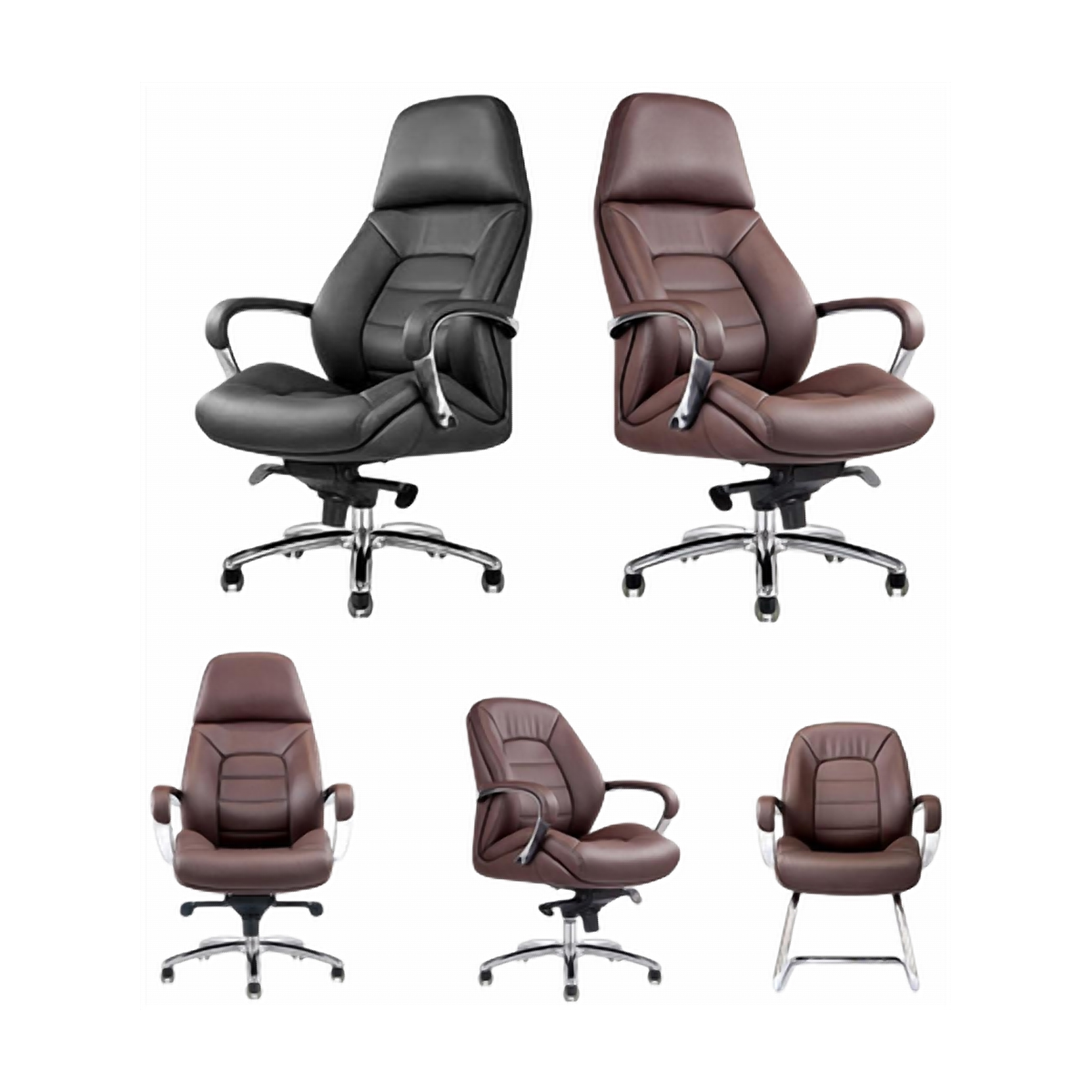
Our office chair range covers task, executive and visitor seating, and the workstation range pairs with it for full cabin fit-outs.